Field-ready maternal and child health app for Garut's frontline workers
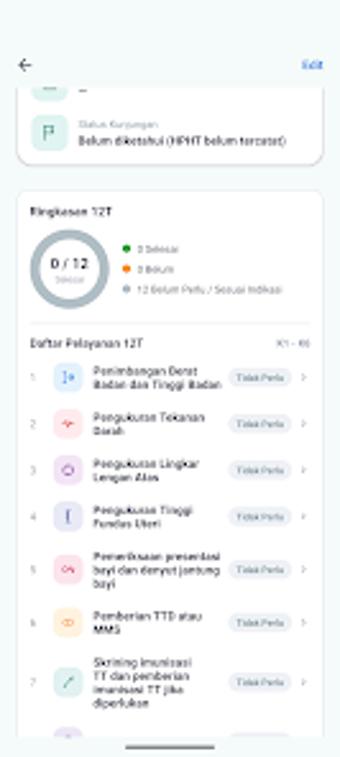
KuApps Garut captures field encounters for pregnant women, infants, toddlers, adolescents, and the elderly through lifecycle forms and on-device tools. Built by Diskominfo Kabupaten Garut to support the Garut Zero Stunting initiative, the app pairs offline data entry with automatic synchronization, WHO z-score calculations, OCR import of KIA Book entries, and account-gated access. It targets midwives, Posyandu cadres, and public-health staff who collect and report community nutrition and immunization data during outreach rounds.
Reliable field recording that matches a daily outreach routine
The app organizes visits into distinct modules for ANC, PNC, newborns, infants, toddlers, adolescents, and elders, which matches the workflows local cadres follow during community rounds. It supports home visit tracking and Posyandu session management, letting teams record screenings and immunization marks on the same device used for registration. That structure reduces context switches for workers who move between households and village posts.
Handles poor connectivity with offline-first syncing
KuApps stores entries locally and performs automatic synchronization once the device reconnects, so data entry continues in areas without a mobile signal. This offline capability is explicitly designed for rural deployment and ties directly into the local health office server when online. The account requirement means only authorized personnel can push synchronized records to the government database.
Automates nutritional assessment and record import to cut manual steps
The app calculates anthropometric status using WHO z-scores immediately after input, which reduces arithmetic errors during growth monitoring. It also includes OCR scanning for KIA Book pages, letting cadres import historical entries with the device camera instead of retyping. Both elements focus on shortening the time between observation and actionable data at the health office.
Built for interoperability and local program integration
KuApps uses the HL7 FHIR standard for health data, enabling direct integration with government systems used for the Garut Zero Stunting initiative. That choice supports structured exchange between field devices and central databases, and positions the tool for coordinated intervention workflows managed by the regency health office and community clinics.
To sum up, a practical tool for field-based nutrition monitoring
KuApps fits frontline cadres and public-health staff who need on-device recording, quick growth calculations, and OCR-assisted import during outreach. It requires an official account, so it suits organised programs run by the health office rather than ad-hoc volunteers. For best use, enable synchronization at the end of each day so records upload promptly and feed local stunting intervention dashboards.